Wednesday, March 06, 2024

Remembering Self-Care and Vocational Awe in the Post-Pandemic World


This is a wonderful presentation by the scholar Fobazi Ettar as part of the NASIG 2021 Conference. I cherish Ettar's work and am truly inspired by their resilience and perseverance despite their personal challenges.  Fobazi Ettar is well-known for their work on vocational awe and library culture, particularly the impact of idealized narratives on librarianship.  Ettar's ideas have influenced and shaped the way I think about our profession (and broader topics about society, too).   Thus, Ettar and Chris Vidas' “The Future of Libraries:” Vocational Awe in a “Post-COVID” World" is an important follow-up to their seminal piece on vocational awe.

This piece is a timely addition to the scholarship, at a time when the world is just coming to terms coming out of the global pandemic. Ettarh outlines two ground rules: the acknowledgment of vocational awe, a romanticized perception of librarianship that can limit progress, and the encouragement to embrace discomfort for personal and collective growth.

Ettar delves into the perception of libraries and librarians as heroes and champions of democracy, highlighting historical figures like Margaret Edwards, Pura Belpré, Barbara Gittings, the Connecticut Four, and contemporary figures like Sarah Kowalski. Ettarh argues that the love for the job and passion, while positive, can be weaponized to exploit library workers.  The concept of "vocational awe" is explored further, portraying librarianship as a vocation rather than an occupation, leading to an uncritical reverence for libraries.

Ettarh challenges this idealized view, pointing out historical instances of library segregation and discriminatory policies. Ettarh discusses how vocational awe is weaponized in the workplace, with an emphasis on the Taylorism Model, where passion is exploited at the expense of workers' well-being. She cites examples of abuse, such as a lack of work-life separation and job creep, exacerbated by the challenges posed by the COVID-19 pandemic.

Ettar concludes with a call for collective action to set boundaries, work collectively, and resist the exploitation of passion. Ettarh urges us to prioritize self-care, advocating that caring for oneself is an act of political warfare. She emphasizes the need for libraries to evolve beyond a Silicon Valley-driven future, focusing on the well-being of library workers and their communities.

In the scholarship about EDI, there is still an emerging role of self-care for the racialized individual who often bears the brunt of the invisible labour, expected (even required) to do extra duties or the oft-heroic phrase of “working twice as hard as others.” Ettar and Vidas warn us of this with wisdom which seems so simple yet doesn’t seem to be disregarded by our work culture.
Setting aside time for your life, your loved ones, and your hobbies is vitally important. I always like to say there is no such thing as a library emergency. . . That email can wait until Monday morning or the next day.

Thursday, February 29, 2024

Absurdities of the Juicero and Libraries

Juicero, circa 2013
Though Julia Glassman is no longer a librarian, her brilliant article, The Innovation Fetish and Slow Librarianship continues to influence the way I view the absurdity of academic libraries during my tenure in this profession.   The article deserves much more attention than I think it gets.   It uses the analogy of a now-defunct and short-lived fad by drawing parallels between the failed Juicero Inc., a Silicon Valley startup producing an expensive and impractical juicing machine, and the pressures faced by academic librarians to constantly innovate in their roles. 

The Juicero, initially marketed as an innovative internet-connected device, was later revealed to be unnecessary as users could achieve the same result by squeezing the juice bags with their hands. The author sees the Juicero as a symptom of late capitalism, emphasizing the pressure for constant innovation in a market saturated with gadgets.

The author relates this to the academic librarian's environment, where career advancement relies on showcasing innovation.  I've certainly experienced this myself, having been caught up in the euphoria of Web 2.0, Library 2.0 and the semantic web just a decade ago -- a sign of the obsession with innovation in academic librarianship, driven by a corporatized academia that prioritizes measurable achievements and publications.  The pressure to constantly innovate, often for its own sake, can lead to impractical projects that consume time and resources without addressing genuine needs.

Glassman recounts a scenario where MLIS students suggested changing a popular reading collection to be less "object-centric" without providing a clear vision for the alternative.  Thus, the rush for constant innovation can result in ideas that lack practicality and fail to meet the actual needs of patrons.   

The author reflects on personal experiences of succumbing to the pressure to innovate, even when existing methods were effective.  The obsession with innovation is deeply ingrained in the academic librarian profession, fueled by the need for immediate and tangible outcomes to justify investments.   I've witnessed this myself, playing a hand in accepting directives while secretly scratching my head at the logic of decisions.

I recall one instance of securing an iPad against the pillar in the middle of the library with no purpose other than it looked "innovative" to do so.   It was stolen the next day and quickly ended the innovative and expensive experiment.   Interestingly, the computer workstations adjacent to the iPad seemed to do just fine the decade before and the decade after the stolen iPad initiative. 

As a solution, the article proposes looking to the Slow Movement for guidance, advocating for a Slow Librarianship approach that prioritizes reflection and meaningful practices over a constant pursuit of impressive achievements. This alternative approach aims to provide deeper, more lasting, and more human services to patrons by rejecting the constant need for innovation and allowing for more thoughtful and responsive practices.  It's something that I'm still trying to integrate into my own work and approach to my life.   It's always a work in progress.   Thankfully, it's not considered innovative.

Monday, December 18, 2023

Trauma-Informed Librarianship for Survivors

As part of the Visible Minority Librarians of Canada Network (ViMLoC), I’ve participated in its mentorship program and have met many talented and eager early-career librarians over the years. I had recently caught up with a mentee who was going through a dark period in their life. We had lost touch over the years but the last time we had connected, they had found a dream job and were so ecstatic to begin their career at an academic library institution. I assumed they had been doing well and looking forward to meeting up for coffee. Until we met in person. I was sad to see this person share with me the experiences of microaggressions at the workplace and a toxic and dysfunctional relationship with superiors. As a racialized person, my mentee had faced racism since childhood and witnessed their parents facing discrimination and prejudice as new immigrants. They never thought that they would face this even into adulthood and at work.


Photo by Pierre Bamin on Unsplash

This colleague looked like a shadow of the cheerful, upbeat, once-optimistic librarian I had once known.A casualty of workplace bullying and harassment, the daily stress of fighting with their organization, followed by the gaslighting they endured, and the confrontations with their boss had finally worn down my mentee. They even brought their own cushion to the restaurant where we were eating and had to stand up every few minutes to adjust their seat to lessen the pain. Unfortunately, this has become more common now that I’ve entered mid-career in my profession and librarians of colour often seek me out for advice and oftentimes, a shoulder to cry on.

I have been researching EDI and anti-racism in libraries for more than a decade now. I’ve felt that I had hit a bit of a roadblock recently, particularly after I completed my sabbatical and put the final touches for publication. But it all feels rather hollow, especially recently. Instead of celebrating, I am dissatisfied. I feel like I have done very little to move forward in the profession. What have I exactly accomplished with this research anyways? Those of us who push for change look at removing systemic barriers and biases through EDI initiatives, but what about those individuals who have been harmed already? What can we do for them in the meantime?

I have listened to many heart-wrenching stories from survivors of toxic workplaces. Bullying. Gas lighting. The list goes on. My interviews became counselling sessions. These very personal and challenging stories were often accompanied by one medical absence or another. There were so many signs of burnout. I felt helpless to do anything but listen and capture a pattern that I was noticing among interviewees. I now realize that these experiences are trauma.

The research literature indicates that there is a large correlation between chronic stress and health challenges. The trauma expert Dr. Elizabeth Stanley has suggested that chronic stress and trauma should be viewed as part of a continuum; stress over time has the same biopsychosocial effects on individuals as acute trauma. It’s very hard for those who haven’t experienced trauma to truly understand it. An event that is stressful for one person may be traumatizing to another.

When people don’t recover from trauma, the suppressed pain may manifest itself through physical and mental illnesses, and chronic pain. There’s an emerging science of mind-body medicine that suggests that emotional pain often manifests itself physically through the body. Studies show that chronic pain and emotional pain emanate from the same part of the brain. There are some in the medical community, such as Gabor Mate (When the Body Says No) and Bessel van der Kolk (The Body Keeps the Score) who are part of a movement that explores the mind-body connection. People whose nervous systems are caused by ongoing stress become stuck in a flight-or-fight mode. But this neuroplastic pain is not imaginary: it’s real.

It goes without saying that seeking medical and counselling support is vital in the healing journey. But beyond that, what can we do to help others? What can we do if we are in these untenable situations ourselves? Karina Hagelin, who identifies as a chronically ill and disabled queer femme librarian believes each one of us can help by taking care of ourselves and others with self-compassion. Karina argues that self-care isn’t being selfish. Instead, it’s a cultural shift in how we approach our work to move towards healing — not just for our patrons, but for each other, and for ourselves. We are all survivors. I highly recommend everyone watch the webinar Trauma-Informed Librarianship: Building Communities of Care which shares ten concrete self-care strategies.

Healing is the best revenge” is the name of Karina’s podcast. It’s such a moving and powerful phrase. One that’s so optimistic and hopeful, which is exactly what we need to turn to in times of despair. Libraries do an excellent job in devoting their mission to serving their communities, but often that community does not include their own staff. I recently shared this podcast with my mentee who I think about every day. I hope they know that their healing journey won’t be a lonely one because I will be here by their side.


This post was previously published on Notes Between Us.

Monday, November 27, 2023

The Five Labours of Equity, Diversity, Inclusion, and Anti-racism Work by Racialized Academic Librarians


I've been fortunate to collaborate with Silvia Vong (University of Toronto iSchool) and Elaina Norlin (Association of Southeastern Research Libraries) on a project about the retention and recruitment of academic librarians in the United States and Canada.  

One of our two articles was published in the International Journal of Information, Diversity, and Inclusion. We were able to draw a great deal from the interviews and we felt it was important to acknowledge the theme of invisible labour or the different forms of labour that may emerge in EDI and anti-racism work for racialized librarians in academia. Our hope is that this work be valued even more and resources be put towards supporting those that are engaged in the work so that it is more than just a few lines on a CV. 

EDI and anti-racism are important work that deserves support, acknowledgement, and resources. The second article (under review at another OA journal) will focus on institutional aspects such as salary, promotion, etc. Below is the link to the first piece:

The Five Labours of Equity, Diversity, Inclusion, and Anti-racism Work by Racialized Academic Librarians (Silvia Vong, Allan Cho, Elaina Norlin)

Friday, September 22, 2023

Care and Compassion: Why We Need to Learn about Trauma-informed Librarianship


I'm really trying to learn as much as I can about self-care and self-compassion which is integral to healing.   I've been focusing a lot of attention on challenging topics, particularly during my sabbatical, on discrimination, exclusion, gaslighting, bullying, the list goes on,  and much of the effects I witness (and personally experienced myself) is chronic stress of which the effects are only beginning to be understood in the medical world.  The trauma expert Dr. Elizabeth Stanley has suggested that chronic stress and trauma should be viewed as part of a continuum; stress over time has the same biopsychosocial effects on individuals as acute trauma.  As such, many of my colleagues in this profession who have faced the onslaught of chronic stress have either left the profession due to burnout or have suffered mental or chronic health issues.  

I'm seeing an emerging emphasis on Trauma-informed librarianship (TIL) in the library world nowadays, but it's still a rare topic at conference circuits.   I really enjoyed Karina Hagelin's session which I believe can help us open up conversations about taking care of ourselves and others for a better profession.  She is so raw and honest -- so deliberate in her messaging about TIL as a vital practice about creating cultural shifts in how we approach our work to move towards healing -- not just for our patrons, but for each other, and for ourselves.  This webinar introduces what is trauma and how it impacts both individuals and communities; the principles and goals of trauma-informed librarianship; how we can apply this lens to library services in actionable ways to better support survivors in our libraries, whether they are patrons or colleagues; and how we can take care of ourselves too, through 10 concrete self-care strategies.

Karina is such a courageous and engaging speaker, and being a chronically ill and disabled queer femme librarian, they have lived experiences and expertise to help us create better cultures in our libraries that center healing through radical empathy, collective care, and social justice work.  Karina is an Outreach and Instruction Librarian at Cornell University who has a very cool website where you can find more information about her work: http://www.karinakilljoy.com/ 
 
TIL is a reminder for us to take care of ourselves and to be compassionate to one another.

Monday, August 07, 2023

Living Well, Living Mindfully in a Post-Pandemic World

Even the darkest night will end and the sun will rise” – Victor Hugo
Since the pandemic, I had been living life as if everything was normal even though the world around me seemed to be falling apart. While externally I was fine, internally I was struggling. Early on, I inwardly beamed at a slower pace of life during 2020. But being locked away at home and socially isolated (Zoom actually made things worse) obviously chipped away at my mental wellness. I also hadn’t fully acknowledged life had changed the past few years – my first newborn, the death of a parent, and changing of job duties – just to name a few.

Depression and anxiety are often subtle and brew in the background for years before it ignites. For me, it began with simple insomnia. Then came body aches and pains. Then disrupted sleep. Dread, fear, sadness – all wore away at my psyche. Numerous physical examinations, blood tests and doctor’s visits equated to nothing. Counselling and medication helped for short periods of time.

My body was telling me to slow down my life and figure out what was going on. It was psychosomatic – my body was telling me something, and it probably saved my life. I want to share what helped me get back on my feet. 
  • Daily exercise – In my darkest moments, even simple walks were strenuous. But the exercise was necessary. Getting up and out of the house and breathing air from nature helped immensely. The saying “motion is lotion” is true; the human body requires it to stay grounded. 
  • Mindfulness – I used an app, Calm, for its guided meditation sessions but there are numerous others available. YouTube and podcasts are immensely useful, too. Deep breathing calmed my nervous system and mindfulness lifted me out of the noise and chatter that was actually the source of my angst. 
  •  Joy – To rediscover my hobbies in life – reading, writing, community – including new ones like yoga all enriched my life. It’s hard to do when in the doldrums of life, and might feel counterintuitive, but joy resurfacing became the light that led me out of my tunnel. 
  •  Community – I didn’t quite realize how isolated I was until it hit me hard emotionally. I felt I was ready to jump into the ocean if that meant I could reconnect. After a couple of years of isolation helped me appreciate that colleagues and friends are important reminders that life is more than work. I cherish time for relationships now, old and new.
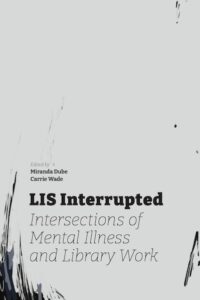
As a librarian, I often turn to research for support, but surprisingly, the LIS literature is mostly barren on this topic, and much of it is about supporting services for patrons. LIS Interrupted: Intersections of Mental Illness and Library Work is one of the few books devoted to this topic by library workers. I hope there will be more soon. The lived experiences of the authors of each chapter bravely share how each faced their challenges. Mental wellness comes from feeling balanced, connected to others and ready to meet life’s challenges – things that a global pandemic helped me understand.

—————————————————————————————————–

This was published in Notes Between Us (NBU), a blog about conversations and topics of interest to writers. The writers are expressing their personal opinions solely. The essays represent their personal beliefs and not those of their workplaces or any organization they are associated with.

Monday, July 10, 2023

Academic Freedom and Academic Failure


Naoko Shibusawa is a 20th-century U.S. cultural historian who studies U.S. imperialism and political culture with an interest in the ideas and ideologies that undergird the U.S. empire and foreign policy. I was surprised to see Asian American Studies scholar Naoko Shibusawa suspended from her faculty role. Certainly, with all the strange occurrences, Shibusawa's article, Notes on Solidarity From the Field is a must-read as it has sparked controversy within the academy. This is concerning considering the infringement of academic freedom. 

Just like many, I scratch my head wondering what atrocity from this piece led to the harsh impunity against Shibusawa.   Brown University came down hard on Shibusawa, but is this justified?   As one observer tells it:
 Certainly, while the essay (filled with anecdotes) is a reflection piece on the years of her personal frustration with the hurdles and anti-Asian racism in order to build Asian American studies, it doesn't take much imagination to believe that this was the last straw for a university administration that had enough of Shibusawa and was set on penalizing her and this seemingly innocuous article was just the smoking gun it needed. 

Shibusawa's ambiguity in identifying specific events and persons at Brown University makes it difficult if not impossible to disclose much about Brown University's internal politics and players to justify such punishment.    In fact, a number of her examples of bullying, pettiness, and microaggressions are pretty much a day at the office in the dirty business that is academia.  

As such, numerous organizations, such as the Journal of Asian American Studies, have issued public statements in support of Shibusawa.  The Ending the Korean War Teaching Collective has even proposed that Shibusawa's "ethos of solidarity and the tendency for institutional racism and sexism is actually entrenched under the guise of proceduralism of Brown University.   Some observers suggest that current and former students feel that Brown University's punishment is more a response to Shibusawa's record of campus advocacy, including her support of Palestinian rights, defence of staff of colour, and criticism of Charles Koch's donations to the university.  

Now, to be clear, Shibusawa's piece is a multifaceted and complex piece that requires debate and discussion, particularly around the issue of multiracial solidarity and the issues that arise with Asian American Studies and its relationship to other disciplines.   Rather, my concern as in unison with numerous others in the academy is the heavy-handed and unilateral sanctions that Brown University's administration has taken against Shibusawa.   The irony is sharp as Shibusawa illustrates in Notes on Solidarity From the Field the many transgressions that are gendered and ageist and takes forms that are not physically violent.   It sends a shiver down the spine of all academics who produce scholarship.  

Shibusawa leaves a few words of wisdom, foreshadowing perhaps a future in that she imagined she could again be punished for standing tall to remind us "to keep generating energy—to keep our eyes on the greater struggle, ongoing and ever more acute, that requires all the energy we can give."