Monday, August 07, 2023

Living Well, Living Mindfully in a Post-Pandemic World

Even the darkest night will end and the sun will rise” – Victor Hugo
Since the pandemic, I had been living life as if everything was normal even though the world around me seemed to be falling apart. While externally I was fine, internally I was struggling. Early on, I inwardly beamed at a slower pace of life during 2020. But being locked away at home and socially isolated (Zoom actually made things worse) obviously chipped away at my mental wellness. I also hadn’t fully acknowledged life had changed the past few years – my first newborn, the death of a parent, and changing of job duties – just to name a few.

Depression and anxiety are often subtle and brew in the background for years before it ignites. For me, it began with simple insomnia. Then came body aches and pains. Then disrupted sleep. Dread, fear, sadness – all wore away at my psyche. Numerous physical examinations, blood tests and doctor’s visits equated to nothing. Counselling and medication helped for short periods of time.

My body was telling me to slow down my life and figure out what was going on. It was psychosomatic – my body was telling me something, and it probably saved my life. I want to share what helped me get back on my feet. 
  • Daily exercise – In my darkest moments, even simple walks were strenuous. But the exercise was necessary. Getting up and out of the house and breathing air from nature helped immensely. The saying “motion is lotion” is true; the human body requires it to stay grounded. 
  • Mindfulness – I used an app, Calm, for its guided meditation sessions but there are numerous others available. YouTube and podcasts are immensely useful, too. Deep breathing calmed my nervous system and mindfulness lifted me out of the noise and chatter that was actually the source of my angst. 
  •  Joy – To rediscover my hobbies in life – reading, writing, community – including new ones like yoga all enriched my life. It’s hard to do when in the doldrums of life, and might feel counterintuitive, but joy resurfacing became the light that led me out of my tunnel. 
  •  Community – I didn’t quite realize how isolated I was until it hit me hard emotionally. I felt I was ready to jump into the ocean if that meant I could reconnect. After a couple of years of isolation helped me appreciate that colleagues and friends are important reminders that life is more than work. I cherish time for relationships now, old and new.
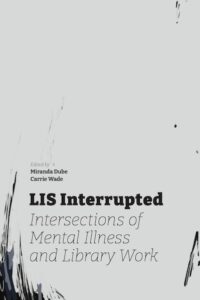
As a librarian, I often turn to research for support, but surprisingly, the LIS literature is mostly barren on this topic, and much of it is about supporting services for patrons. LIS Interrupted: Intersections of Mental Illness and Library Work is one of the few books devoted to this topic by library workers. I hope there will be more soon. The lived experiences of the authors of each chapter bravely share how each faced their challenges. Mental wellness comes from feeling balanced, connected to others and ready to meet life’s challenges – things that a global pandemic helped me understand.

—————————————————————————————————–

This was published in Notes Between Us (NBU), a blog about conversations and topics of interest to writers. The writers are expressing their personal opinions solely. The essays represent their personal beliefs and not those of their workplaces or any organization they are associated with.

Monday, July 10, 2023

Academic Freedom and Academic Failure


Naoko Shibusawa is a 20th-century U.S. cultural historian who studies U.S. imperialism and political culture with an interest in the ideas and ideologies that undergird the U.S. empire and foreign policy. I was surprised to see Asian American Studies scholar Naoko Shibusawa suspended from her faculty role. Certainly, with all the strange occurrences, Shibusawa's article, Notes on Solidarity From the Field is a must-read as it has sparked controversy within the academy. This is concerning considering the infringement of academic freedom. 

Just like many, I scratch my head wondering what atrocity from this piece led to the harsh impunity against Shibusawa.   Brown University came down hard on Shibusawa, but is this justified?   As one observer tells it:
 Certainly, while the essay (filled with anecdotes) is a reflection piece on the years of her personal frustration with the hurdles and anti-Asian racism in order to build Asian American studies, it doesn't take much imagination to believe that this was the last straw for a university administration that had enough of Shibusawa and was set on penalizing her and this seemingly innocuous article was just the smoking gun it needed. 

Shibusawa's ambiguity in identifying specific events and persons at Brown University makes it difficult if not impossible to disclose much about Brown University's internal politics and players to justify such punishment.    In fact, a number of her examples of bullying, pettiness, and microaggressions are pretty much a day at the office in the dirty business that is academia.  

As such, numerous organizations, such as the Journal of Asian American Studies, have issued public statements in support of Shibusawa.  The Ending the Korean War Teaching Collective has even proposed that Shibusawa's "ethos of solidarity and the tendency for institutional racism and sexism is actually entrenched under the guise of proceduralism of Brown University.   Some observers suggest that current and former students feel that Brown University's punishment is more a response to Shibusawa's record of campus advocacy, including her support of Palestinian rights, defence of staff of colour, and criticism of Charles Koch's donations to the university.  

Now, to be clear, Shibusawa's piece is a multifaceted and complex piece that requires debate and discussion, particularly around the issue of multiracial solidarity and the issues that arise with Asian American Studies and its relationship to other disciplines.   Rather, my concern as in unison with numerous others in the academy is the heavy-handed and unilateral sanctions that Brown University's administration has taken against Shibusawa.   The irony is sharp as Shibusawa illustrates in Notes on Solidarity From the Field the many transgressions that are gendered and ageist and takes forms that are not physically violent.   It sends a shiver down the spine of all academics who produce scholarship.  

Shibusawa leaves a few words of wisdom, foreshadowing perhaps a future in that she imagined she could again be punished for standing tall to remind us "to keep generating energy—to keep our eyes on the greater struggle, ongoing and ever more acute, that requires all the energy we can give."


Sunday, May 07, 2023

Bamboo Ceiling Reframed: The Impact of Social Practices in Management on Asian Library Managers


It was such a pleasure to moderate a session featuring my friend and role model librarian, Silvia Vong.   Silvia and I are conducting a research project and it has been an eye-opening working with such a talented individual.   As the Associate Chief Librarian for Scholarly, Research and Creative Activities at Toronto Metropolitan University in Toronto, Silvia has worked in universities for over a decade.  She's completing her Ph.D. research which focuses on the impact of neoliberal conventions and managerialism on equity and anti-racism work in Canadian universities. Silvia draws on the works of Critical Race Theory scholars, Postcolonial Theory, and Bourdieu to examine issues in librarianship.   Her talk is based on a chapter that is published in Libraries as Dysfunctional Organizations and Workplaces.  

In 2005, Jane Hyun, a management consultant, wrote a book titled Breaking the Bamboo Ceiling: Career Strategies for Asians. Though the text was intended to “introduce” Asians to dominant management practices and workplace culture, the text was problematic in that it essentialized Asians, reiterated deficit narratives, and narratives of the “other.” In an effort to add another perspective to the issue of the lack of representation, Silvia's research was designed with a structuralist approach. Rather than blame or point to a group, the study focused on examining social and organizational barriers through a Bourdieusian and Critical Race Theory lens to identify how dominant structures exclude, reward assimilation, and build into a system, of invisible or taken-for-granted rules.   The talk's presentation slides on Bamboo Ceiling Reframed are here.